Boules games in history-
The ancient Greeks are recorded to have played a game of tossing coins, then flat stones, and later stone balls, called spheristics, trying to have them go as far as possible, as early as the 6th century BC. The ancient Romans modified the game by adding a target that had to be approached as closely as possible. This Roman variation was brought to Provence by Roman soldiers and sailors. A Roman sepulchre in Florence shows people playing this game, stooping down to measure the points.
After the Romans, the stone balls were replaced by wooden balls. In the Middle Ages, Erasmus referred to the game as globurum, but it became commonly known as boules (i.e. 'balls'), and it was played throughout Europe. King Henry III of England banned the playing of the game by his archers, and in the 14th century,Charles IV and Charles V of France forbade the sport to commoners; only in the 17th century was the ban lifted.
By the 19th century, in England the game had become "bowls" or "lawn bowling". In France it was known as boules and was played throughout the country. The French artist Meissonnier made two paintings showing people playing the game, and Honoré de Balzac described a match in La Comédie Humaine.
In the South of France the game evolved into jeu provençal (or boule lyonnaise), similar to today's pétanque, except that the playing area was longer and players ran three steps before throwing the ball. The game was played in villages all over Provence, usually on squares of land in the shade of plane trees. Matches of jeu provençal around the start of the 20th century are memorably described in the memoirs of novelist Marcel Pagnol.
The invention of petanque-
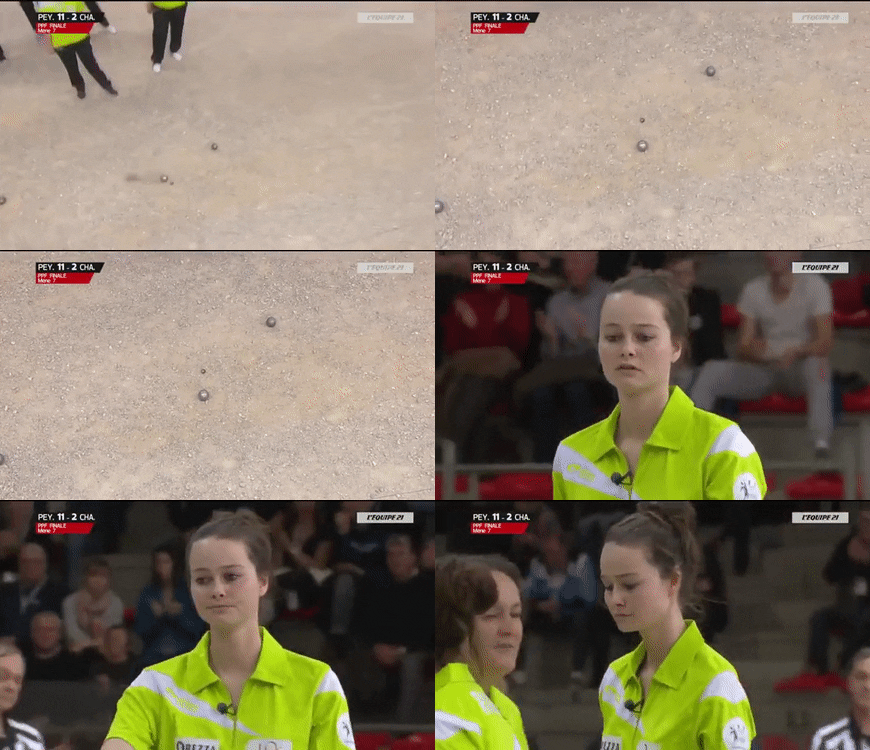
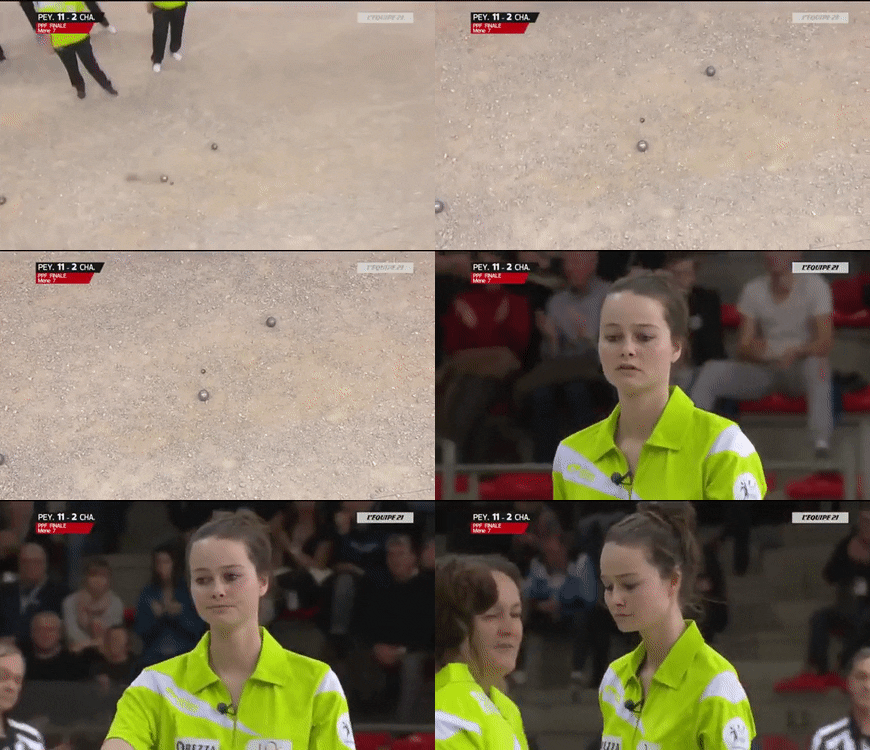
Pétanque in its present form was invented in 1907 (or possibly 1910) in the town of La Ciotat near Marseilles. It was invented by Ernest Pitiot, a local café owner, to accommodate a French jeu provençal player named Jules Lenoir, whose rheumatism prevented him from running before he threw the ball. In the new game, the length of the pitch or field was reduced by roughly half, and a player no longer engaged in a run-up while throwing a ball—he stood, stationary, in a circle.
The first pétanque tournament with the new rules was organized in 1910 by the brothers Ernest and Joseph Pitiot, proprietors of a café at La Ciotat. After that the game spread quickly and soon became the most popular form of boules in France.
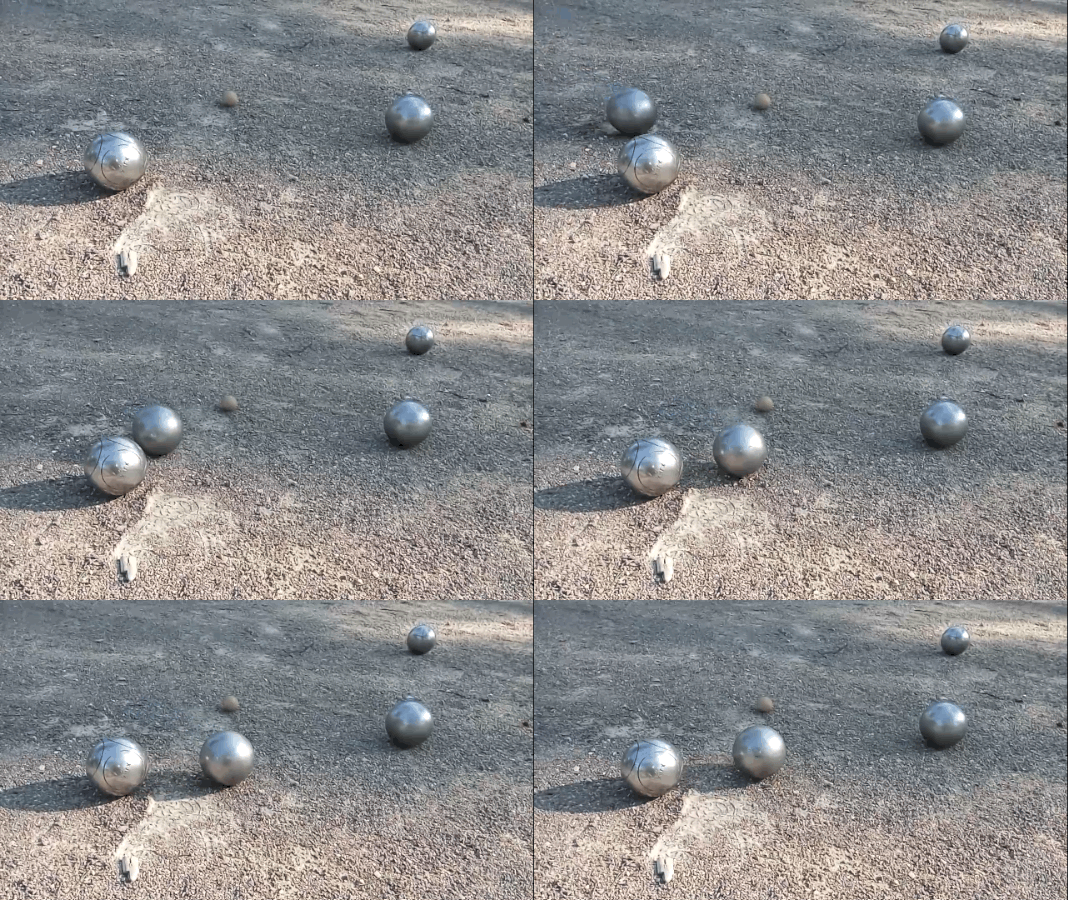
Before the mid-1800s, European boules games were played with solid wooden balls, usually made from boxwood root, a very hard wood. The late 1800s saw the introduction of cheap mass-manufactured nails, and wooden boules gradually began to be covered with nails, producing boules cloutées ("nailed boules"). After World War I, canon-ball manufacturing technology was adapted to allow the manufacture of hollow all-metal boules. The first all-metal boule, la Boule Intégrale, was introduced in the mid-1920's by Paul Courtieu. The Intégrale was cast from a bronze-aluminum alloy. Shortly thereafter Jean Blanc invented a process of manufacturing steel boules by stamping steel blanks into hemispheres and then welding the hemispheres together to create a boule. With this technological advance, hollow all-metal balls rapidly became the norm.
Modern history of petanque-
The international governing body of petanque is the Fédération Internationale de Pétanque et Jeu Provençal (FIPJP). It was founded in 1958 in Marseille and has about 600,000 members in 52 countries as of 2002. Many countries have their own national governing bodies, including the FPUSA (USA) and the FFPJP (France).
The first FIPJP (Men's) World Championships were organized in 1959. The most recent championships were held in Faro(2000), Monaco (2001), Grenoble (2002, 2004 and 2006), Geneva (2003), Brussels (2005), and Pattaya, Thailand (2007). Fifty-two teams from 50 countries participated in 2007.
Pétanque is not currently an Olympic sport, although the Confédération Mondiale des Sports de Boules ('World Federation of the Sport of Boules') - which was created in 1985 by three international boules organizations (and has since been joined by a fourth) specifically for this purpose - has been lobbying the Olympic committee since 1985 to make it part of the summer Olympics.
National and international organizations-
sanctioned with the Fédération Internationale de Pétanque et Jeu Provençal (FIPJP, International Federation of Pétanque and Jeu Provençal). On the national level, the French Fédération Française de Pétanque et Jeu Provençal (FFPJP, French Federation of Pétanque and Jeu Provençal) has more than 300,000 licensed members. There are strong national federations in Germany and Spain.
Petanque is actively played in many nations with histories of French colonial influence during the last centuries, especially in Southeast Asia, including Laos, north Thailand, Vietnam, Cambodia, and Puducherry, India, as well as some parts of Africa, e.g. Madagascar. There is also a Canadian petanque federation based in Québec.
In the United States the Federation of Petanque USA (FPUSA) has (as of December 2013) approximately 1,800 members in 40 clubs, and estimates about 30,000 play nationwid.
The terrain-
The area where a petanque game is played is called a "terrain" (from the French word terrain). Games can be played out in the open (in a public park, say) where the terrain is essentially unbounded, or played on a "marked terrain" with marked boundary lines. The boundary lines can be drawn with chalk or paint, but traditionally the boundary lines are made of strings tightly strung between nails driven into the ground.
The "ends"-
A game consists of several rounds or innings. In French, a round is called une mène, which is usually translated into English as "an end". An end is finished when both teams have played all of their boules. At the end of an end, the team with the boule closest to the jack scores one point for each of its boules that is closer than the opposing team's closest boule. That means that the winning team can score anywhere from one to six points per end. Typically the team that wins the end scores one, two, or three points.
As the game progresses, each team accumulates points with the ends that it wins. A game consists of as many ends as is necessary for one of the teams to score 13, the winning number of points.
The circle-
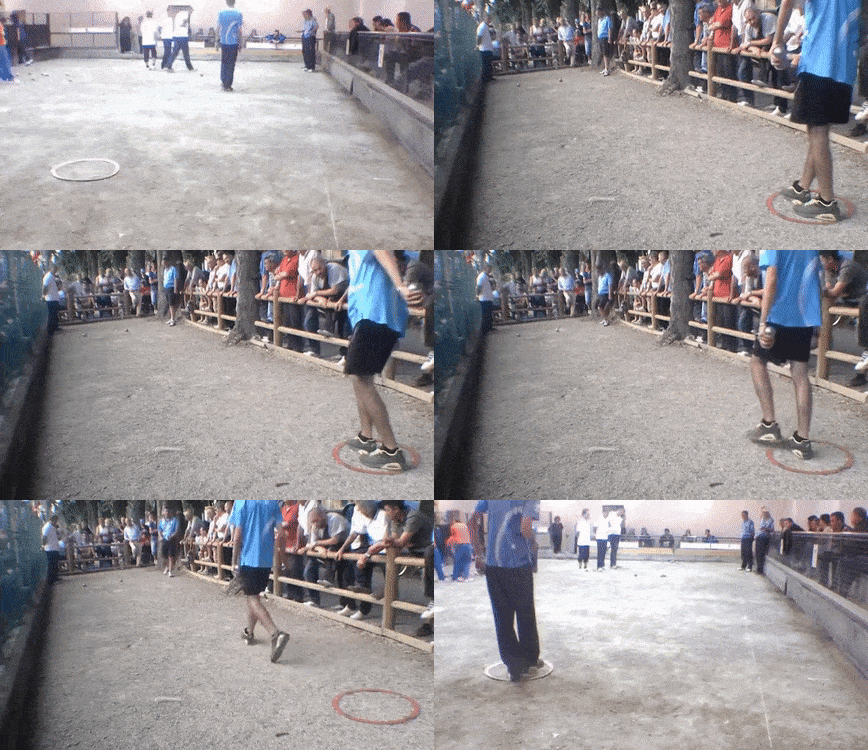
In petanque, players throw while standing in a circle. Traditionally, the circle was simply scratched in the dirt. Starting around 2005, red plastic "prefabricated" circles were introduced and they are now very popular. Some clubs prefer to draw the circle the traditional way, while others prefer to use the plastic circles. A circle drawn on the ground must be 35–50 cm in diameter, while a plastic circle must have an inside diameter of 50 cm.
Throwing the jack-
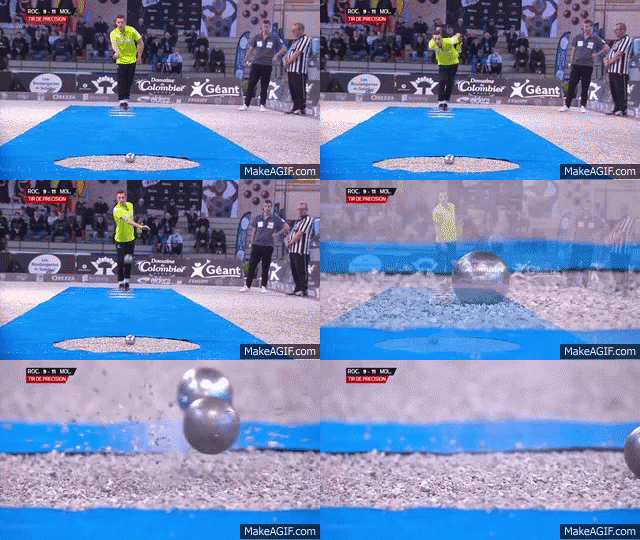
A game begins with a coin toss to determine which team plays first. The team that wins the toss begins the game by placing the circle, throwing the jack, and throwing the first boule. The jack must be thrown to a distance of 6-10m from the inside of the circle. A jack that is thrown too short, or too long, must be re-thrown
Order of play-
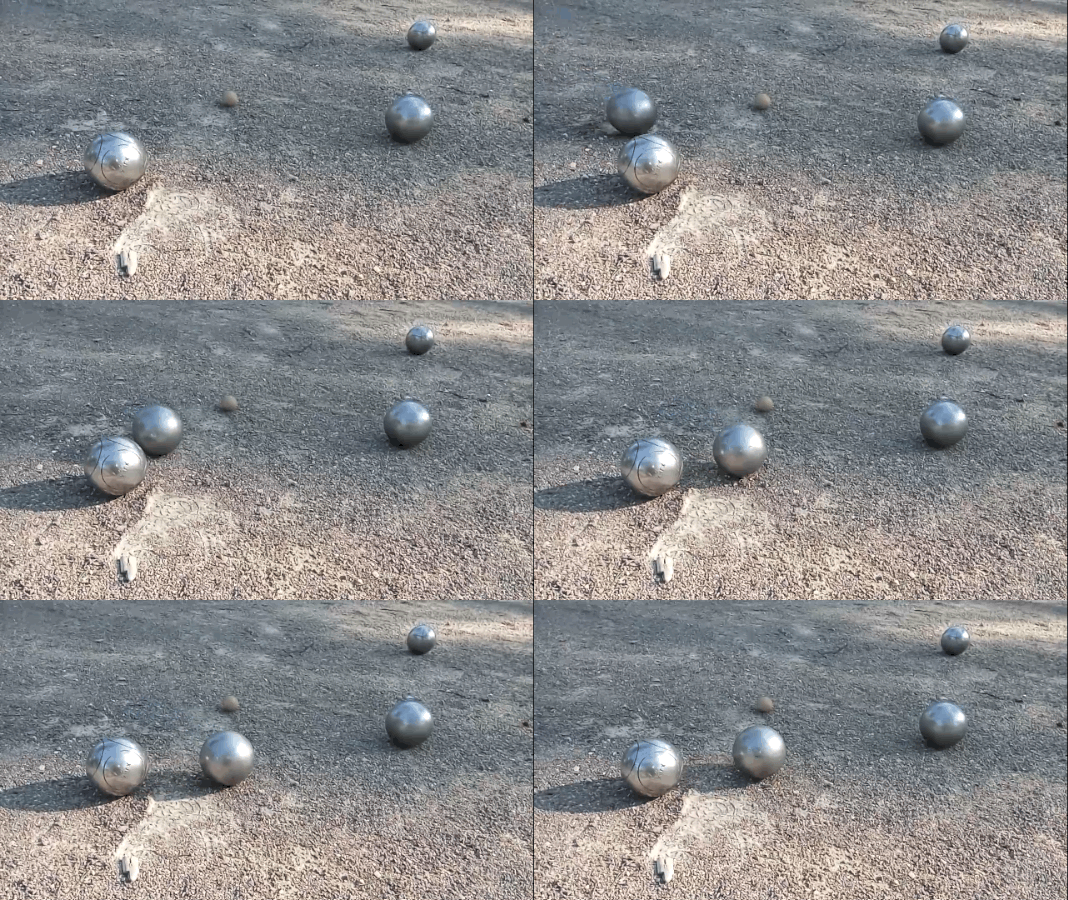
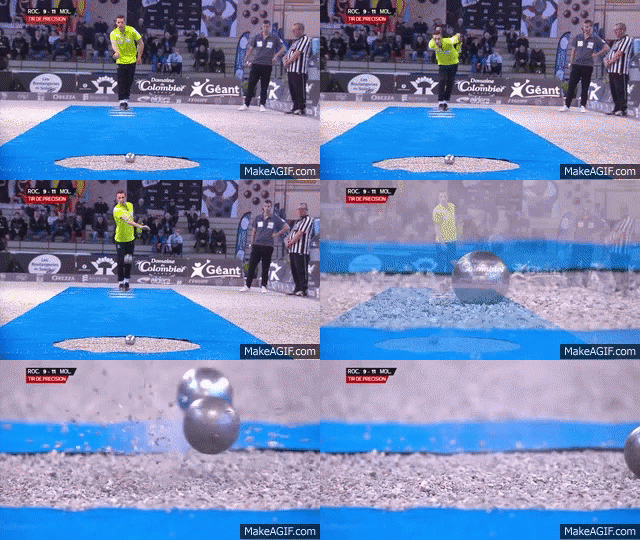
A player from the team that threw the jack, throws the first boule. Then a player from the opposing team throws a boule. The team with the boule that is closest to the jack is said to "have the point". The team that does NOT have the point, throws the next boule. (Basically, the team that "has the point" is winning, and it gives the other team a chance to regain the point.) The team that does NOT have the point continues to throw boules until it either (a) gains the point, or (b) runs out of boules.
If the closest boules from each team are an equal distance from the jack, then the team that played last plays again. If the boules are still equidistant then the teams play alternately until the position changes. If the boules are still equidistant at the end of the "end" (French: mène) then no points are scored by either team.
The team that wins an end, starts the next end. A player from the winning team places (or draws) a new circle around the location of the jack at the completion of the previous end, and throws out the jack and the first boule to start the next end.
An end is complete when both teams have played all of their boules, or when the jack is knocked out of play (goes "dead").
If the end stops because the jack is dead, then one of two things can happen. If one (and only one) team still has boules left to play, that team scores one point for each boule that it still has in hand. Otherwise neither team scores any points in the end (like an inning in baseball in which neither team scores any runs).
But assuming that the end finishes normally, with the jack still alive, then the team with the closest boule receives one point for each of its boules that is closer to the jack than other team's closest boule.
Playing area-
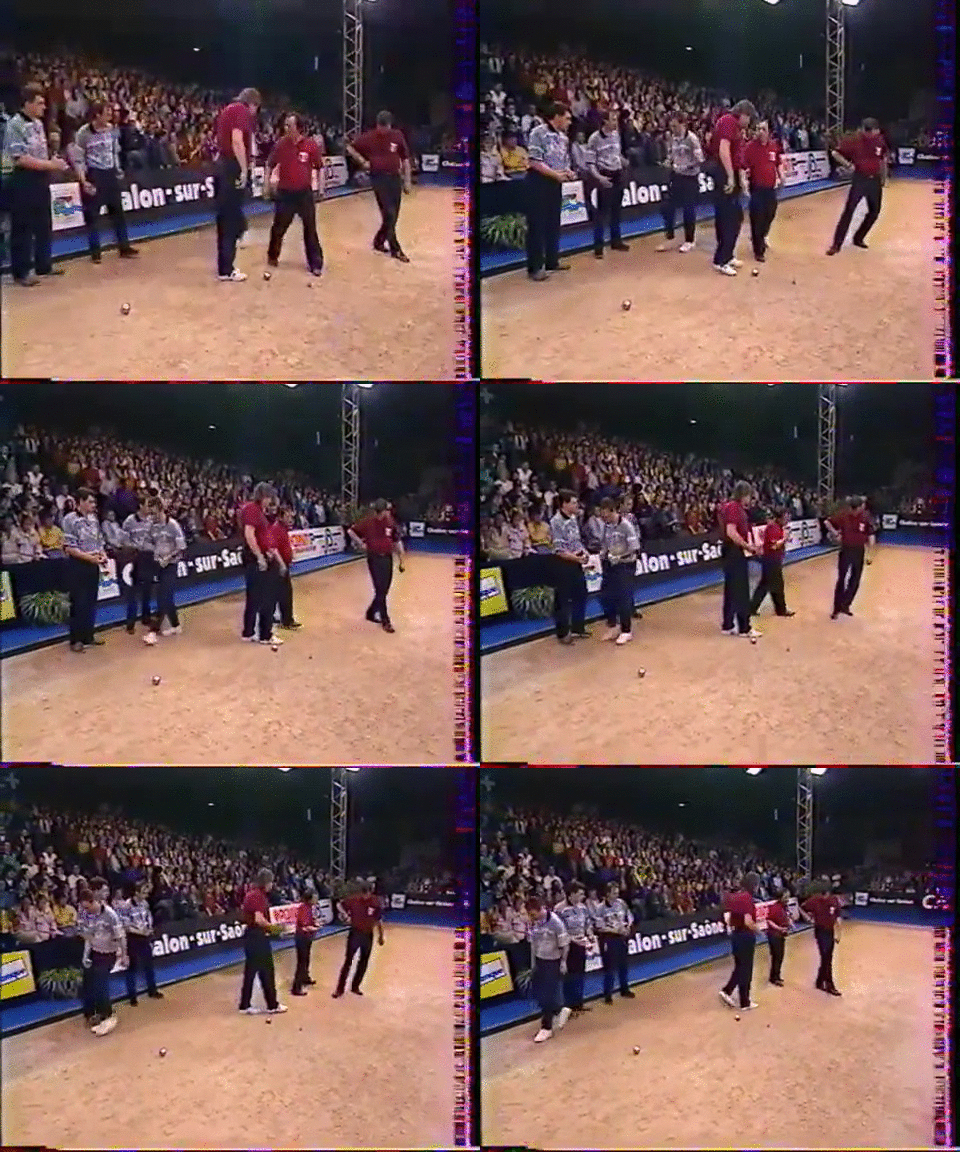
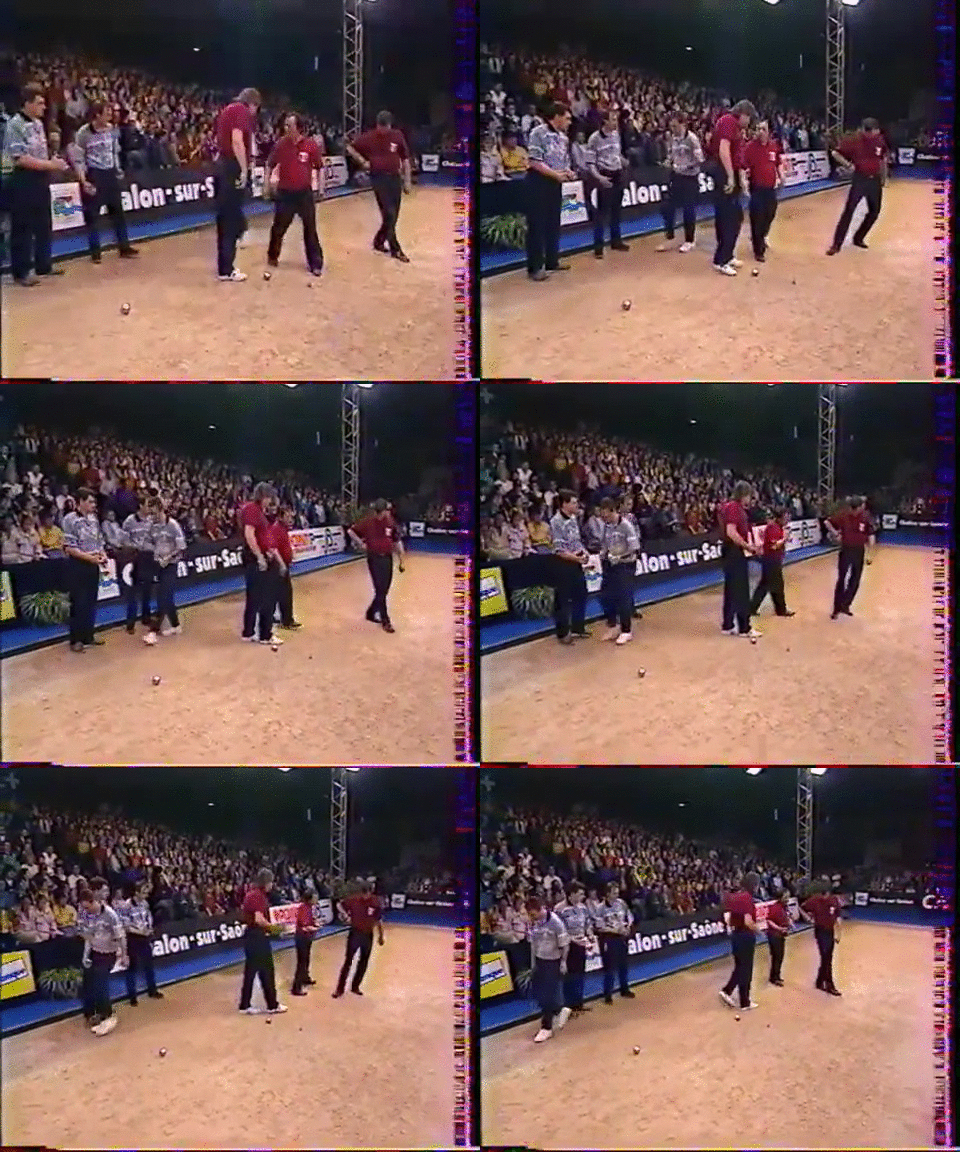
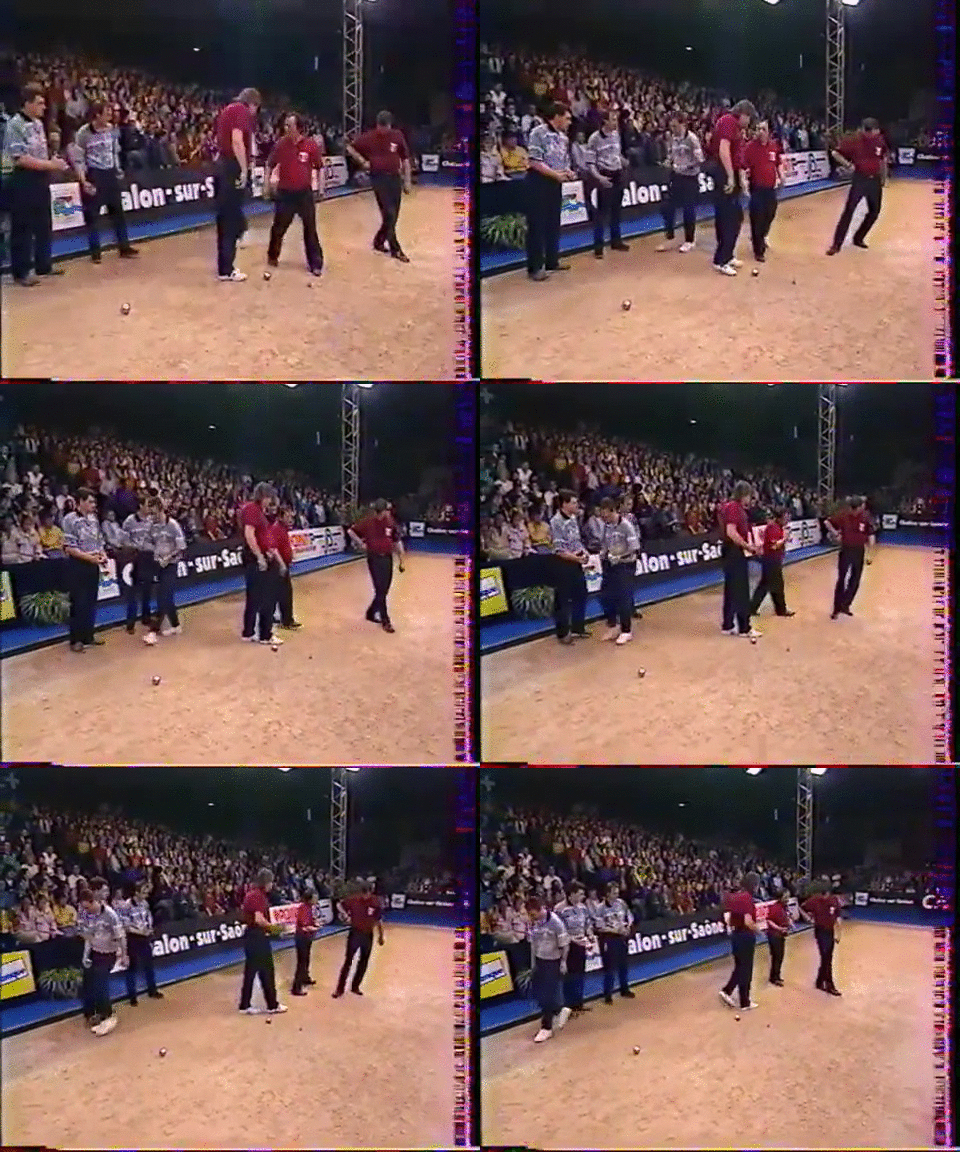
Pétanque can be played on almost any flat, open space. The ground may be irregular and interrupted by trees or rocks, and the surface is likely to be uneven, with some areas hard and smooth and other areas rough and stony. When an area is constructed specifically for the purposes of playing petanque, the playing surface is typically loose gravel, decomposed granite, brick grog or crushed sea shell. Sandy beaches are not suitable, although light plastic boules are sometimes used to adapt the game for the beach. There is no requirement for backboards or sideboards (as in bocce), but dedicated playing areas are often enclosed in boards or some other structural barrier.
In France, village squares and park pathways are often used as pétanque playing areas. In addition, many towns have recreational facilities (boulodromes) constructed especially for playing pétanque.
An area where a single pétanque game is played is called a terrain. A playing area is an area where one or more petanque games are being played. At any given time a playing area may be hosting one or more terrains.
For tournaments, a large playing area is subdivided and marked off (typically using nails and string) into rectangular marked terrains (also known as "courts" or "pistes") so that multiple games may be carried on simultaneously. For tournament play, a marked terrain is a rectangle at least 4 meters wide and 15 meters long.
In the United States, proponents of pétanque such as author Byron Putman often urge the use of non-dedicated public terrains – public walking paths, playground areas, dirt/gravel parking lots, and baseball infields – as terrains.
